

 中文
中文 한국어
한국어 日本語
日本語
According to the Untied Nation Office for Disaster Risk Reduction (UNDRR) report - produced with Belgium’s Centre for Research on the Epidemiology of Disasters at UC Louvain, there were 7,348 recorded natural disaster events worldwide over the past 20 years, resulting in 1.23 million deaths, 4 billion affected population, and a total economic loss of $2.97 trillion. A surge of climate-related natural disasters is the biggest reason for the rise of the total number of disasters[i].
Climate change not only leads to reduced productivity of terrestrial ecosystems, severe disruption of Marine ecosystems, and increased instability in agricultural production, but also increases public health risks. Wang Yong, the director of the Center for International Policy and Economy of Beijing university and the invited senior researcher of Center for China & Globalization (CCG), cited the data observed by the world meteorological organization (WMO), which show the positive correlation between climate change and the concentrated outbreak of global epidemic in the last decade. This indicates that climate change might contribute to the global outbreak in recent years[ii]. In addition, climate change may compound with other factors, creating more serious systemic risks.
Under such circumstances, major countries around the world attach great importance to the strategic layout of green technology, and put forward R&D planning in industries, energy, transportation, and many other fields. On September 22, 2020, General Secretory Xi Jinping announced the "3060" carbon targets, which aims to peak carbon dioxide emissions by 2030 and achieve carbon neutrality by 2060. On December 18, 2020, the Central Economic Work Conference listed "carbon peak and carbon neutral work" as one of the eight key economic tasks in 2021. Furthermore, "carbon neutrality" has been put in a core position during the "Two sessions" in March 2021. The carbon targets are not only a solemn commitment that China has made to the international community to cope with global climate change, but also a force by which China is transformed in production and lifestyle.
"Peak carbon" means that carbon dioxide emissions reach a peak and gradually decline. According to the World Resources Institute (WRI), so far, there are 54 countries have achieved peak carbon emissions, including the United States, Japan, Russia and the European Union and other developed countries[iii]. "Carbon neutrality" refers to control and reduce greenhouse gas intensity, and finally achieve "zero emissions" by offsetting carbon dioxide emissions through afforestation, energy conservation and carbon sink in a certain period of time.
Achieving carbon dioxide peak and neutrality emission is both a revolution and a systematic project for China. The National Development and Reform Commission and the Ministry of Industry and Information Technology of the People’s Republic of China have planned to accelerate the adjustment and optimization of industrial and energy structure, promote technological innovation, and develop new energy, with a focus on promoting the transformation of China's energy policy. According to the report of International Energy Agency's (IEA) that published in September 2021, nearly 90 per cent of China's greenhouse gas emissions come from the energy system. That means if China plans to achieve carbon peak by 2030, it should take actions in three key areas: improving energy efficiency, developing renewable energy and reducing coal use[iv]. Specifically, more adjustments and improvements need to be made in the use of fossil energy and carbon emissions. Renewable energy, mainly photovoltaic and wind power, needs further technological development to occupy a dominant position in energy supply structure (see Figure 1). Under these circumstances, green technology will enter another development boom, during which the R&D in green field and corresponding patent protection are getting attention.
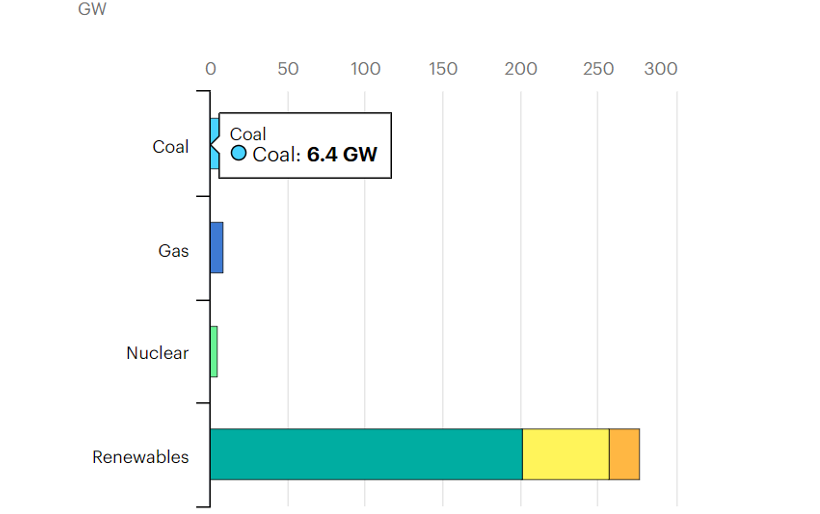
Figure1 Average annual power capacity additions in China in the Announced Pledges Scenario (APS) 2020-2060
In recent years, a large number of green and low-carbon drivers have emerged through the strategy of revolutionizing energy production and consumption. The energy sector roadmap to carbon neutrality shows that China leads the world in the number of newly installed solar photovoltaic power plants. China’s production of electric vehicle batteries and new energy vehicles is also in the front rank of world, accounts for 70 per cent and more than 50 per cent of the global capacity, respectively[v]. At the present stage, China should concentrate on the research and development of key technologies, and lead and drive the high-quality development of the new energy industry, said the person in charge of the intellectual property center of China Huaneng Group Co LTD. Huaneng Group has established a Clean Energy Research Institute as early as in 2010, and gained a batch of IP rights in green energy, including carbon dioxide capture, utilization and storage technology. By the end of 2019, Huaneng Group had nearly 1,200 patents in clean energy field, contributing to the development of China's green technology revolution in energy field. Another example is Blue Alliance, which adopted three technical routes, solar photovoltaic plus electric heating, solar thermal heating, and biomass heating, in heating pilot project. It cooperated with Xi 'an Longji Green Energy Technology Co., Ltd. and Shandong Shangmeilijia New Energy Company to carry out pilot projects and promote the transformation of patent achievements in the photovoltaic field. The latter two companies have filed numerous patent applications in the fields of photovoltaics and biomass fuel heating systems, respectively.
China has adopted a priority review system for energy-saving and environmental friendly technologies to promote the development, innovation and widespread use of green technologies. According to the Administrative Measures for Priority Examination of Patents issued by the CNIPA, patent applications or patent reexamination cases involving key national development industries, such as energy conservation and environmental protection, can request priority examination. When the applicant makes a request for priority examination, he or she shall submit a written request for priority examination, prior art or prior art information materials and relevant supporting documents. The relevant departments of State Council or the Provincial Intellectual Property Office shall sign the recommendation opinions.
Priority review is important for both innovation and transformation of green technologies. On the one hand, it speeds up the licensing process, so that the innovation achievements of enterprises can be effectively protected in time; On the other hand, shorter licensing period allows companies to show their ability to own patents to potential investors, thus promoting the commercialization of green technologies.
Despite the difficulty and challenges of achieving the carbon target by 2060, there are also once-in-a-lifetime opportunities for many industries in the conditions of developing green technology and economy, among which the new energy sector is directly benefited. The development of clean energy and the research and development of low carbon, zero carbon and negative carbon technologies will hit deeply the traditional high carbon industry, making it realize the necessity of transformation. With social and economic transformation of China, the financial sector will also head for green economy.
The transformation of China's energy system most benefits to the development of clean energy, especially to the photovoltaic, wind power and other technologies that are relatively mature in technology. According to the Global Energy Internet Development Cooperation (GEIDCO)[vi], in China's primary energy consumption structure, the proportion of clean energy is expected to rise from the current 15% to 31% in 2030, and reach 90% in 2060, realizing a comprehensive transformation of the energy system.
Increasing the proportion of renewable energy, maximizing the use of clean energy such as solar energy, wind energy, nuclear energy, hydrogen, and ammonia, promoting energy conservation and emission reduction in the industrial sector, promoting zero-carbon transportation and green buildings, and enhancing carbon sinks can all contribute to China's industrial transformation. In this process, new energy related industries, such as new energy vehicles, batteries, transportation and logistics, infrastructure and resource cycle, as well as related equipment manufacturing, big data platform and green terminal products, will have significant opportunities to develop.
According to the blue book, entitled Zero Carbon China and Green Investment, which was co-released in November 2020 by the Investment Association of China (IAC) and the Rocky Mountain Institute, a zero carbon China will create seven investment fields, and leverage 70 trillion green industry investment opportunities, including renewable resource use, energy efficiency, terminal consumption of electrification, zero carbon power generation technology, energy storage, hydrogen and digital, among which photovoltaics and wind power installations and inter-regional transmission channel construction occupy the largest proportions, accounting for 37% and 30% respectively [vii](see Figure 2). In these investment areas, however, government funds can only take up a small part, especially in renewable resource utilization and zero-carbon power generation technologies. That’s why the government encourages research institutions, universities, enterprises and private investors to work together to promote the research and development in these areas and enhance the transformation and commercial use of relevant technologies.
The green investment gap opens a larger space for finance. At present, China's green credit and green bonds have achieved a large-scale development. By 2021, the green credit has exceeded 13 trillion yuan and the cumulative issuance of green bonds has exceeded 1.2 trillion yuan. Although the credit ratio is still low relative to that of the whole country, the development of green finance and investment, as a young investment object in the financial field, is bound to have a broader development space during the transition of the whole economy and society.
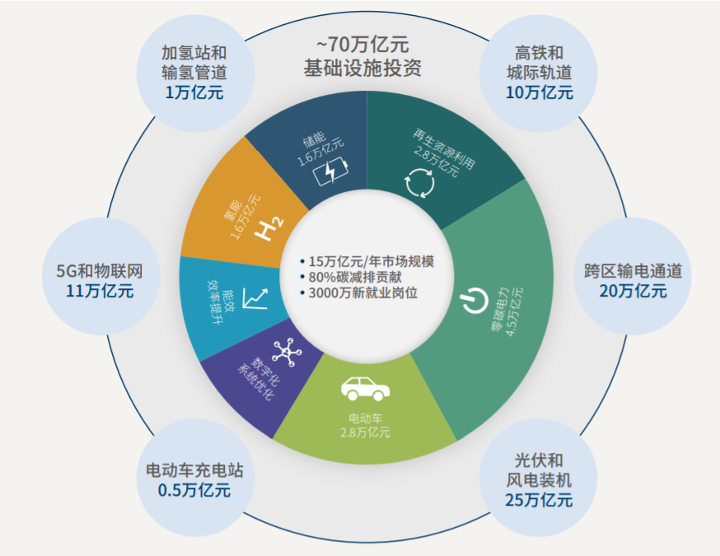
Figure 2 Extracted from the Zero Carbon China and Green Investment
Innovation is the core of green future. Since 2010, the development of green patents in China has been growing rapidly, among which the number PCT patent applications show an increasing trend year by year. This is due to the active advocacy in green development, innovation, and other environmental policies of government in recent years. The preferential policies of the state to enterprises and private patentees encourage the emergence of many patents. According to Shen Changyu, the director of the CNIPA, the number of China's PCT applications reached 69,000 in 2020, ranking first in the world. The number of invention patents granted in China reached 530,000, equivalent to every 10,000 people have 15.8 patents, which outperformed the goal of country's 13th Five-Year Plan, showing that China has become a major country in intellectual property rights. However, compared to the United States, Japan, Germany and other IP powerhouses, China is still inferior in terms of PCT application quantity, quality and overseas layout (see Figure 3).
As can be seen from FIG. 4 (1) and (2), The patent layout of the world's major countries (including the United States, Germany, China, Britain, France, Japan, Korea, etc.), mainly focus on environmental management technology, the climate mitigation technology related to energy production, transmission and distribution, the climate mitigation technology related to transportation, the climate mitigation technology related to construction, and the climate mitigation technology related to the production of products and/or processing[viii].
The number of patents of the United States, Japan and Germany is significantly higher than that in other countries in almost every technology category. Except for the climate mitigation technology related to transportation, the number of PCT patents of the America is higher than other countries in the other seven technology categories, among which the environmental management technology, energy production, transmission and distribution, and product production or processing are main advantages. Germany has the same R&D direction. Japan leads in transport-related climate mitigation technologies; China still has a certain gap compared with them.
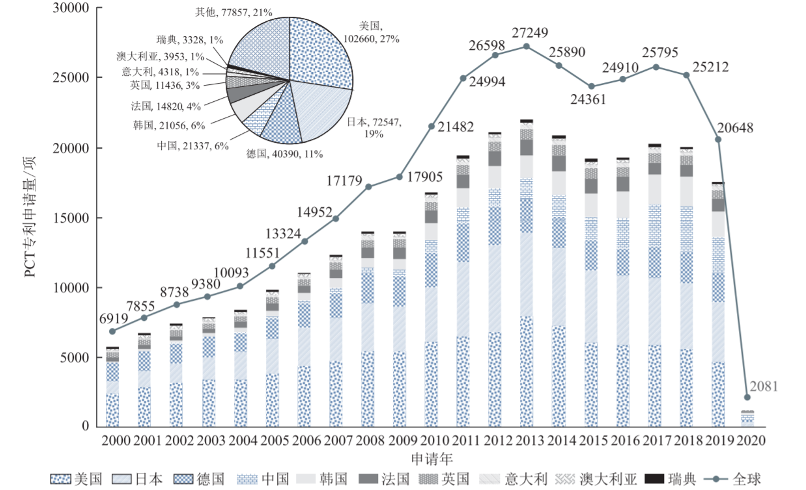
Figure 3 Trend of PCT patent application in green technology field
In the green industry related to environmental management technology, the maintenance of environmental patents owned by Chinese applicant is basically 6.1 years, while the maintenance of green patents owned by foreigners in China is 9.2 years, in which the latter is much longer by contrast. This implies that many patents currently filed by Chinese have no real commercial value, which is an important reason for the low conversion rate of technological achievements. In addition, compared with the United States and Germany, patent applicants in green industry of China have weak awareness of overseas layout and intellectual property rights. Xie Hongxing, the director of Chuanglan Clean Air Industry Alliance, pointed that "96 per cent of the patents filed by Chinese patent applicants are only effective in China, few of them are distributed overseas. While only 38 per cent of American applicants will base their patents in the territory of United States, the rest are all in overseas. Besides, only 8 per cent of German patents are filed and only effective in Germany, the rest 92 per cent are distributed outside the country[ix]. The weak awareness of overseas patent layout makes it easy for domestic patentees to lose their overseas patent rights and fail to effectively protect their innovation and carry out business international competition.
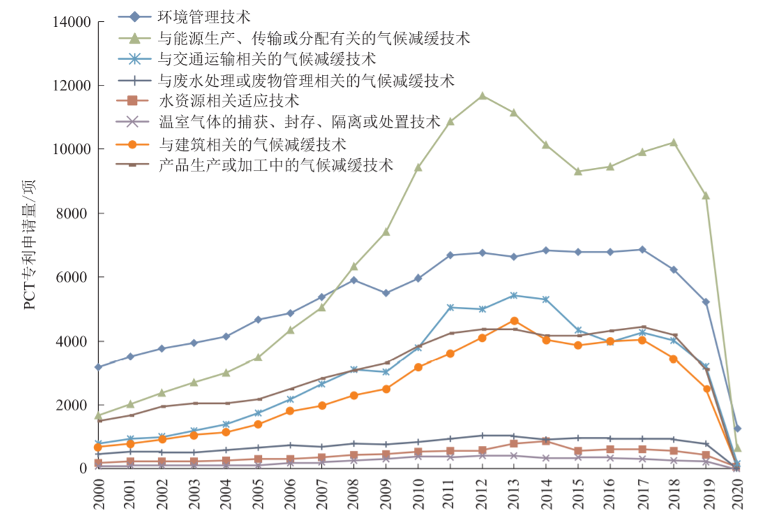
Figure 4 (1) The trend of PCT patent application in various branches in green technology
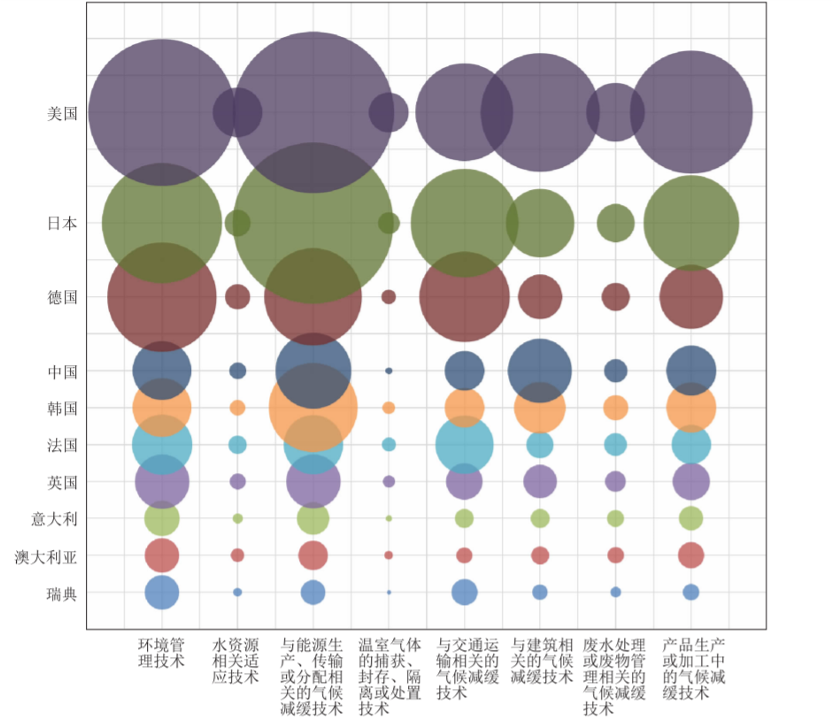
Figure 4 (2) Distribution of technology categories in green technology in major countries
Facing the problem of weak patent application and overseas layout in green industry, it is important for Chinese enterprises, institutions and individuals to take advantages of the "3060" carbon targets, strengthen the R&D in the eight fields of green technology, transforming the technological development into commercial value, and finally forming a benign "technology monopoly" in China. For example, photovoltaics is a relatively mature clean energy industry in China, ranking first in the world, owning certain technological advantages. The problem, however, is that China is not yet complete independent in some key components and technologies. The related enterprises still rely on foreign technology, which is, to some extent, not safe. From another perspective, it just shows that there is still a lot of space for entities in this filed to carry out research, development and innovation. On the basis of achievements made by predecessors, future generations should further supplement and improve the global layout of intellectual property in green industry.
With the support from the government, the high-tech enterprises in China should formulate patent strategies matching their business goals, and integrate technological development, patent awareness and business strategies to explore and arrange innovation and invention points to improve their technological and business competitiveness. In the era of vigorously promoting the high-quality development of green industry, companies should work together with research and development institutions, private investors, and incubation bases to give full play to their own high advantages and jointly promote China to become a global intellectual property powerhouse in green technology.

©2016 北京恒博知识产权代理有限公司 版权所有 京ICP备12050430号
